For many, the spring and summer months bring an abundance of events, whether it’s a destination wedding, family celebration, work-related gala, or other special gathering. Is your wardrobe ready? We connected with Kathryn Snow, the private client stylist and wardrobe expert behind Style Me Ada, to get her insight.
DRESS CODES
According to Snow, event dress codes give you a lane, but your style tells the story. While they can be a bit ambiguous sometimes, she recommends avoiding getting caught up in the specific lingo. Instead try to match the energy, not the literal words, of a dress code.
“The best way to gauge what to wear to an event is to evaluate the dress code + the invite + the venue,” Snow said. “These three elements combined give you the best guidance of how to dress.”
Snow breaks down dress codes as the following:
- Cocktail: “Elevated, not overdone. Usually a nice dress and heels. But in the right fabric and colorway, a jumpsuit, pant or skirt combination could work, too.”
- Semi-Formal: “You’re still dressed up, but in a more refined and expected way. I would recommend sticking to a midi-length dress. Stay clear of jerseys or casual knits, and use more dressy fabrications such as silk, satin, etc.”
- Formal: “Formal dress codes are asking for elevated fabrics and impeccable fit. Generally speaking, a column gown is the way to go. Being formal means knowing your audience and when it’s time to stand out and when it’s not.”
- Black Tie: “For women, there isn’t as dramatic a distinction between formal dress codes and black tie. Regardless, this is where you commit. Long hemlines and elevated fabrics are safe bets. Plan for clean tailoring, nice accessories, and hair and makeup that supports the outfit (versus distracting from it).”
And while this should go without saying … as a wedding guest, steer clear of anything white or that could be photographed as such, no matter the setting.
WHAT’S ON TREND
For 2026, Snow is noticing that column and slip gowns continue to trend, with satins, silks, chiffons, and other breathable fabric leading the way. Minimal embellishments, such as open backs, high slits and sheer panels, are also going to be prevalent.
“There’s also a lot of architectural interest and drama in dresses this year, including elements of historical references,” Snow said. “It’s very 18th-century inspired. Think: fitted bodices, and sculpted or peplum waists. Also, higher necklines and puff sleeves.”
In terms of color palettes and patterns, Snow sees romantic textures or prints such as lace and refined florals continuing.
“Metallics will also be everywhere, especially silver, which feels really fresh,” she said, noting the easiest way to dabble in this trend is via accessories like bags and shoes. “Silver, gold, it doesn’t matter. More is more. My best advice is to stop trying to follow the rules, and focus on being appropriate. There’s no uniform or one-size fits all. Consider your body and your comfort level, and then dress accordingly.”
WEATHER WOES
Sometimes Mother Nature has her own plans on the day of an event. Snow reminds us that in the face of bad weather, practical doesn’t have to mean boring—it just has to be strategic.
“Weather is the great equalizer … it doesn’t care about the dress code,” Snow said. “Add accessories that help to mitigate weather changes. A lightweight wrap, polished layer, or blazer can be a great addition. I always also prioritize fabrics that hold shape, look great in pictures, and compliment the general temperature.”
DO A TEST RUN
Ultimately, Snow recommends trying on your whole look and moving around in it.
“Stand, sit, breathe, walk ... events aren’t still,” Snow said. “You don’t want to be fussing with your shoes, a strap, or anything else. Wear your whole look for five minutes at home, and you’ll know immediately if you have to make an adjustment.”
Written by Sarah Suydam, Managing Editor for West Michigan Woman.
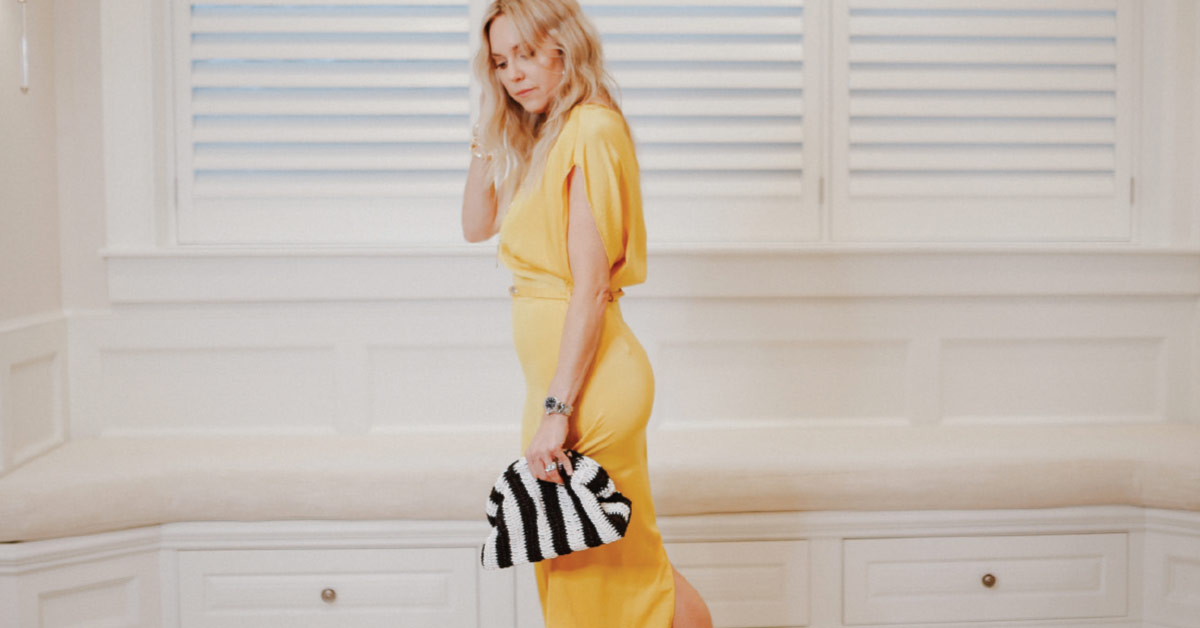
Photo courtesy of Gabby Seekell Photography.
This article originally appeared in the Spring ’26 issue of West Michigan Woman.