For most of my life, survival shaped my definition of success.
When you have lived through addiction, trauma, and profound loss—including the loss of a child—success becomes very small, very immediate, and very practical. It meant staying sober. Getting out of bed. Keeping my family safe. Making it through the day without everything unraveling. It meant managing grief quietly and learning how to function while carrying pain that never fully leaves.
In survival mode, you focus on containment—of emotions, of crises, of risk. Stability feels fragile. Rest feels unsafe. Growth feels irresponsible when the ground beneath you has not always been steady. For years, just not falling apart felt like an accomplishment.
There is wisdom in that kind of survival. It kept me alive. It carried me through recovery. It allowed me to mother my children even when my heart was heavy and my resources were limited. But it also narrowed my imagination. My dreams weren’t gone; they were simply placed so far ahead of me that reaching for them felt unsafe, even irresponsible. They existed somewhere in the distance, visible but unattainable, impossible to grasp while so much of my energy was devoted to endurance. I wasn’t asking what I wanted to build or who I was becoming. I was asking how to survive.
This past year marked a turning point.
For the first time, I’m feeling what it means to do deeply relational, purpose-driven work with the goal of helping to strengthen the very systems that were not designed with my story in mind. For much of my life, my story was told about me—by circumstances, institutions, and statistics. I was often described as resilient, as someone who “beat the odds.” But resilience, when left unexamined, can quietly become another burden.
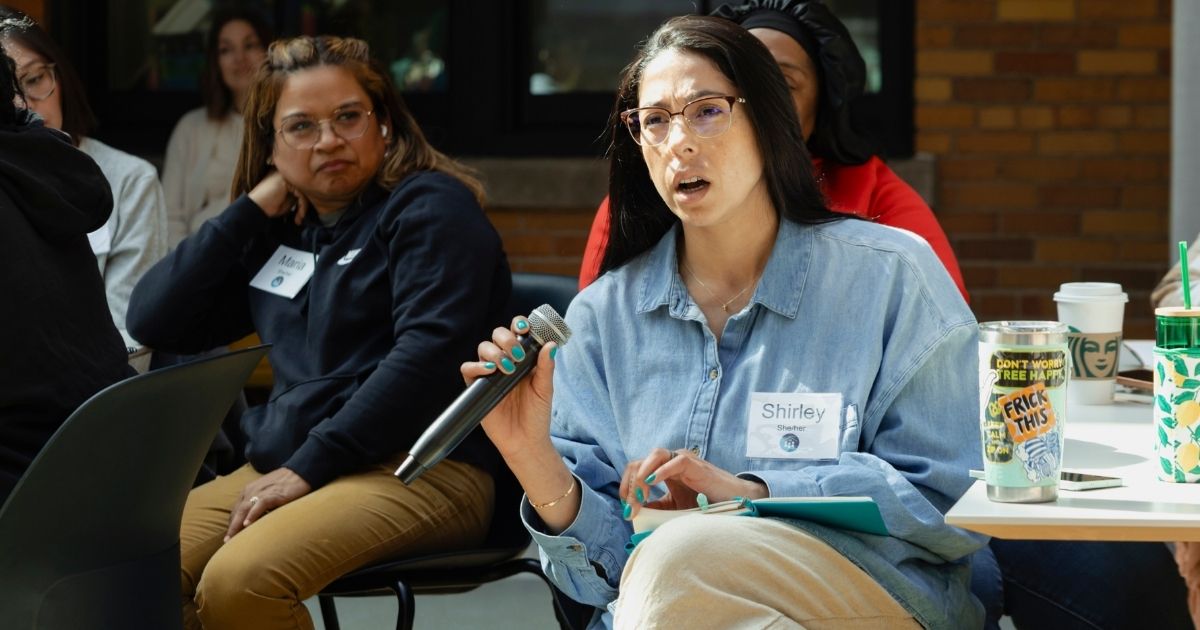
Through my participation as a Family Leader in the Steelcase Foundation’s Investment in Families Initiative, something has fundamentally shifted. This initiative centers families not as problems to be fixed, but as experts in their own lives—partners in shaping the systems that affect their daily reality. Being part of this cohort has given me a voice. It’s empowered me to speak not only from lived experience, but with authority. I am no longer translating my life for systems. I am now working to shape them. I now clearly see how my story—my life—and the stories and lives of the Family Leaders in this Initiative alongside me offer a valuable lesson that employers, government structures, and community organizations must learn from.
This Initiative placed my story within a larger collective narrative focused on long-term stability, equity, and systems change. I am surrounded by other parents and caregivers whose lived experience carries wisdom. Together, we are not just sharing stories; we are influencing how institutions listen, respond, and build. I now understand that my story is not an exception—it is evidence of what becomes possible when families are trusted and centered.
What surprised me most was the relief.
Not relief from the expectations set upon me and those I set for myself. But rather relief from being seen and heard, for the very first time. I am grounded. And from that grounding, my imagination has begun to grow again. Dreams that once felt distant no longer feel unsafe to reach toward. They feel possible—connected to who I am and where I stand now, and more importantly, where my life and the lives of my children can go.
That shift reshaped how I understand leadership, healing, and generational wealth.
Through the Initiative, I now see generational wealth as more than financial stability. It is emotional safety. The ability to pause instead of panic. It looks like parents having voice. A voice that is both heard and valid.
That is where narrative justice comes in.
Narrative justice means honoring lived experience as truth and expertise. It means refusing to let stories be reduced to deficits or outcomes. It means trusting those most impacted to help design the systems meant to support them.
And as women business and community leaders, you are in the exact right roles to make narrative justice a reality. By simply listening, asking questions of the women in your lives about their experiences and dreams, and lifting those voices up, you can ensure that those you are working to reach are active participants in the future we’re collectively working towards together.
I am coming full circle—not back to who I was, but forward into who I am becoming. I am rewriting the story, not as someone who merely survived, but as someone helping shape a future rooted in trust and dreams.
And that, to me, is real wealth.
Shirley Arill is a mother, family leader in the Steelcase Foundation Investment in Families Initiative, and a recovery counselor with Journies, Inc. out of Grand Rapids, Michigan.