
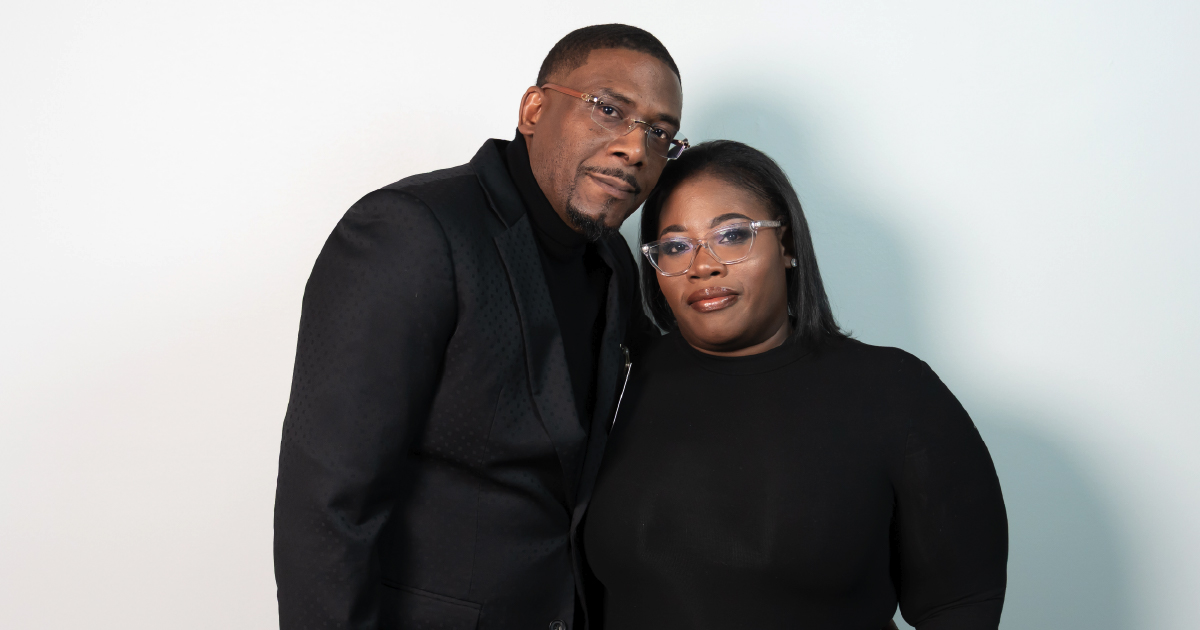
What began as an informal mentoring initiative by JD Chapman Jr. during a time of self-reflection while serving 10 years in Michigan Department of Corrections as a juvenile offender has grown and evolved into Realism Is Loyalty (RIL), a Black-founded, Grand Rapids-based nonprofit dedicated to empowering youth and families through intensive mentorship and therapy. Since his release in 2007, Chapman has dedicated himself to mentoring youth and building a stronger community.
Launched by Chapman and a group of like-minded returning citizens committed to guiding young men in their community, RIL’s early efforts soon expanded to include young women, as well. The organization gained momentum and continued to evolve, deepening its focus on youth violence prevention, driven by lived experience, continued education, and a growing understanding of the needs facing youth and families.
Established as a 501(c)(3) nonprofit organization on April 14, 2014, Realism Is Loyalty today provides youth with a safe, relatable, and comfortable space that promotes participant self-reflection and intense engagement, offering the opportunity to explore and examine their stories and the systems that have created their current thoughts and beliefs.
We connected with Antoinette Chapman, MA, LPC, CAADC, RIL’s Co-Executive Director and Lead Mental Health Clinician, to learn more about how the organization meets people where they are and equips them with the tools to build a better future.
West Michigan Woman: Please share some background on yourself and how you came to be involved with RIL.
Antoinette Chapman: I started my career with family court as an intern in the community service program. That ultimately led to a job in Kent County Juvenile Detention Center, where I worked for 10 years. I met JD in detention where he was facilitating some “nontraditional” groups. I knew that if I was going to have real impact with youth in the community, I would need to do work with the entire family unit. This thought inspired me to advance my education and led me to get a Master’s Degree in Counseling with a focus on substance use and trauma.
At this point, I continued my professional career with the State of Michigan, where I worked in Child Protective Services for approximately eight months. During this time, I took the time to really learn and understand their policies, procedures, and practices to better support the families that I would be eventually serving in the community—by helping them to navigate and understand this system if they found themselves involved. After working for the State of Michigan, I moved on to Wedgwood Christian Services, where I was a community-based Substance Use Disorder Clinician with adolescents in Kent and Muskegon Counties before coming over to Realism Is Loyalty full time.
WMW: What experiences in your own life led you to dedicate your career to helping young people and families heal?
AC: The environment that I grew up in exposed me to many different things. I was surrounded by poverty, gun violence, and overall dysfunction. I knew that if I wanted something different for myself and my family, my education was going to be a key factor for me, so I took that thought and literally ran with it. My faith in God and my educational pursuits allowed me to create a vision for what I wanted to do and staying focused on that created success for me.
When I started this journey, I planned to work with adults. However, after my internship with family court and then my time in detention, this identified my path for me. I wanted to always be who I needed when I was a young person. I always wanted someone who could relate to me, meet me right where I was at, and not judge me. Ultimately, I believe my life mission is to assist youth and families in their quest for generational healing and to help bring reconciliation back into the family unit. This is what led me to pursue higher education and to become a licensed professional counselor.
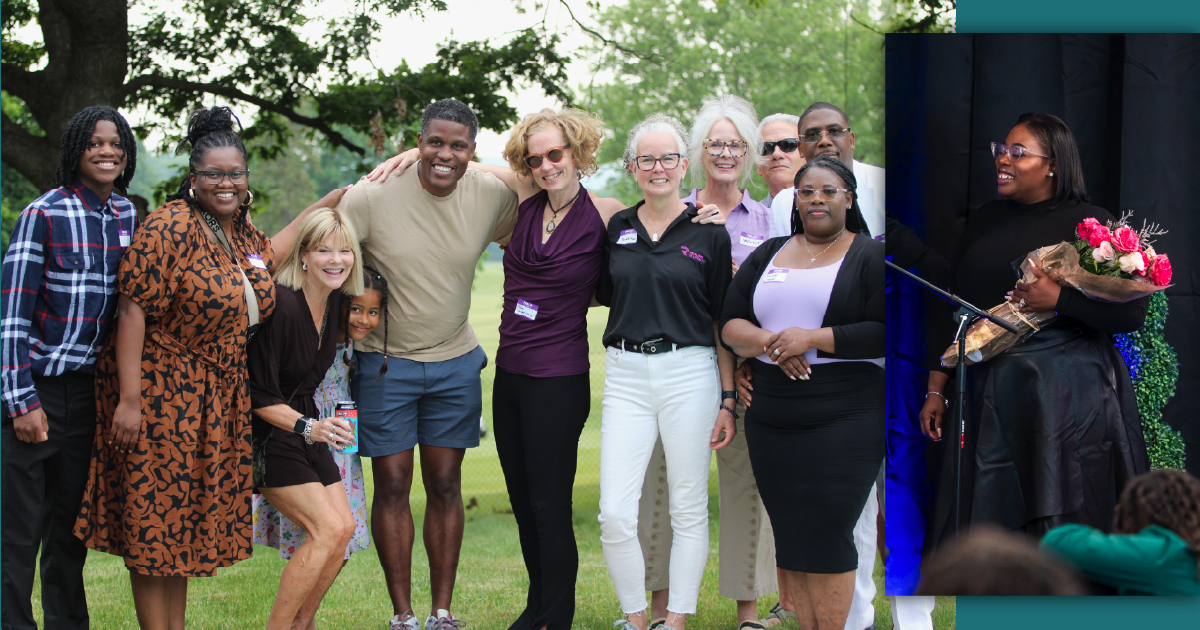
WMW: What is the mission of Realism Is Loyalty and how does the organization make that mission a reality?
AC: “Empowering, Encouraging, and Strengthening Youth in Spite of Story, System, or choice.” This is done by being intentional in program structure and design. We do this by meeting youth and families exactly where they are, and that looks different for every family. As service providers, it’s our responsibility to allow these participants to remain the “expert” of their lives. We are just here to walk alongside them and assist them in navigating the untapped greatness that we all have but may not have been guided to maximize their own personal greatness.
WMW: What does the name “Realism Is Loyalty” mean to you personally, and how does that philosophy influence the way you work with young people?
AC: It’s impossible to understand what real is, what thorough is, what loyal is, if you don’t first identify what those things mean to you and how you implement them in your life and decisions that you make.
I think I came into this with a similar philosophy a long time before RIL, and it has always been the way I approach this work because I understand that it’s relational. Because of that, you must build rapport with the youth and families, and once you do that, you can begin to do the life changing work.
WMW: RIL emphasizes meeting young people where they are. What does that look like in practice when a young person is distrustful of adults, resistant to help, or struggling to change?
AC: I think that looks different with every young person. There are various factors that play a role in determining the appropriate treatment plan. Combining the two disciplines, mentoring and mental health, wholistically addresses the issues that exist individually. That could look like 1-to-1 mentoring three to four times a week, individual therapy weekly, family therapy monthly, supports to increase school attendance, assistance with seeking employment, a moment to get out of the house and do an activity to process an issue, etc. It’s always directed by need of a specific participant and/or family.
WMW: What do you think adults, educators, and policy makers most often misunderstand about young people who are labeled “troubled” or “at risk”?
AC: There are various factors that created the lives and decisions that youth and families make. Generational issues, environment, lack of positive role models, etc. This is why RIL administration advocates for our families the way we do, in all spaces where we think we can have impact and push the needle forward by articulating our thoughts and potential solutions to the issue(s).
WMW: What do you believe are the root causes of youth violence that our community isn’t talking about enough?
AC: The root causes are vast and complex, with poverty and systemic barriers being just some of the potential roots. RIL doesn’t believe that the issues that exist are not being talked about enough. We think the approach, investment, and solution-focused implementation necessary is what’s not being talked about enough.
WMW: What evidence or outcomes would you point to when explaining the impact of RIL to someone unfamiliar with the organization?
AC: We don’t really get caught up on numbers. In this work, quantitative data is not a priority for RIL. We are more focused on qualitative data, as we know with the nuanced work that we do, the barometer for success is the positive impact we have with the youth and families we serve. However, all RIL programs are evaluated by Ph.D.-level third-party evaluators, and those reports are accessible.
WMW: Tell us about your Thanksgiving drive or additional fundraising efforts. Why are these initiatives so important to the work that RIL does.
AC: Our Thanksgiving drive is dear to my heart because I never forget where and what I came from. I can remember times, as a child, that my family depended on community support for food insecurities, especially around the holiday season. Thanksgiving is a time to share what we are thankful for, and our Thanksgiving support has become a cornerstone for RIL to ensure that the families that we work with are supported around the holidays to lighten the load that most experience.
In our Thanksgiving Baskets, we provide a complete turkey dinner with all the fixings, personal hygiene products, household cleaning supplies, and a family focused gift card. The stress that’s relieved by many families because of our efforts is a huge help and it warms our team’s hearts to know again we have removed yet another barrier from the families that we serve.
WMW: What options are there for those who wish to get involved, volunteer, or learn more?
AC: Please visit our website, look us up on social media, join us at our next Friendraiser, or reach out to our office for a tour. In this work, every member of community has a role; it’s a matter of identifying where and how you fit best and being open to rise to the occasion and do your part.
Written by Sarah Suydam, Managing Editor for West Michigan Woman.
Photos courtesy of Realism Is Loyalty.